The orthopedic specialist will evaluate the child’s symptoms, sports activities, injury mechanism, and limitations in movement during a detailed consultation.
Physical examination includes checking for swelling, tenderness, joint locking, painful movements, instability, and cartilage-related symptoms around the knee.
X-rays and MRI scans are commonly advised to assess cartilage damage, osteochondral defects, loose fragments, and injuries involving the bone and cartilage surfaces inside the joint.
Early diagnosis and treatment are important in growing children because untreated cartilage injuries may affect long-term joint health, sports participation, and knee development.
Surgical treatment may be recommended when cartilage injuries in children fail to heal with conservative treatment or when loose cartilage and bone fragments are present inside the knee joint.
Cartilage tissue has limited healing potential because it receives very little blood supply.
Pediatric orthopedic surgeons use minimally invasive arthroscopic techniques to stimulate healing, repair damaged cartilage, and restore smooth joint surfaces for better knee movement.
Treatment depends on the child’s age, activity level, location of injury, and severity of cartilage damage.
In many early-stage injuries, the orthopedic doctor may initially recommend non-surgical treatment using the R.I.C.E treatment -
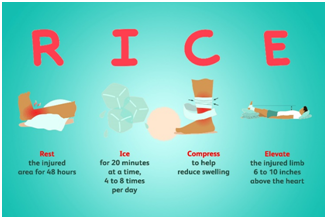
Initial care for pediatric cartilage and osteochondral injuries
Arthroscopic surgery allows the surgeon to repair damaged cartilage surfaces using minimally invasive techniques while preserving healthy joint tissue in growing children.
Tiny holes are created in the underlying bone to stimulate the body’s natural healing response and encourage new cartilage growth inside the damaged area.
In osteochondral injuries where cartilage and bone fragments become loose, surgeons may reposition and secure the fragment to restore normal joint anatomy.
Cartilage restoration techniques are considered in children and adolescents with larger cartilage defects or persistent symptoms despite conservative treatment.
The size of the cartilage defect, age of the child, and overall knee health help determine the most appropriate treatment approach.
Osteochondral grafting procedures may be used to replace damaged cartilage and underlying bone with healthy tissue.
These advanced procedures aim to restore smooth cartilage surfaces, improve knee function, and help young athletes safely return to sports and physical activity.
Osteochondritis dissecans is a condition where a small portion of bone and cartilage inside the knee loses blood supply and becomes damaged.
It commonly affects young athletes involved in repetitive running, jumping, and high-impact sports activities.
Children may experience knee pain, swelling, locking, stiffness, and difficulty participating in sports. Early treatment improves healing and helps prevent long-term joint problems.

Osteochondral injuries may involve both cartilage and underlying bone
Children have open growth plates, making their knees different from adult knees. Cartilage and osteochondral injuries may sometimes involve the growth plate area.
These injuries require careful evaluation and treatment planning to avoid disturbance in normal bone growth and knee alignment.
Pediatric orthopedic surgeons use child-specific surgical techniques and rehabilitation programs to protect growing tissues while restoring knee function safely.

Specialized pediatric care helps protect growing knee structures
Rehabilitation plays an important role in helping children recover safely after cartilage or osteochondral injuries.
Treatment programs focus on restoring knee movement, reducing swelling, improving muscle strength, and gradually returning the child to sports activities.
Physiotherapy also helps improve balance, coordination, flexibility, and lower limb mechanics to reduce the risk of future injuries.
Young athletes should return to sports only after complete healing and medical clearance from the orthopedic specialist.
The rehabilitation timeline depends on the severity of cartilage damage, type of surgery performed, and the child’s response to physiotherapy.
Gradual return-to-play protocols help ensure proper healing while reducing stress on the recovering cartilage surfaces.
With proper treatment and rehabilitation, most children and adolescents can safely resume sports and physical activities with improved knee stability and function.
Early evaluation and specialized treatment for cartilage and osteochondral injuries in children can prevent long-term knee problems and help young athletes return safely to active lifestyles.