Fractures are common complaints for which many parents bring their children to Young Bones Clinic for treatment.
Dr. Ratnav Ratan is an expert in treating all types of fractures in Gurgaon, Delhi and nearby areas.
A fracture is defined as a break in the continuity of the bone. It can range from a small crack to a bone broken into two or more pieces.
Proper treatment focuses on pain control, healing of the bone, prevention of complications, and restoration of normal function.
Our bones are generally healthy and strong and support us in movement. However, due to strong force, low bone density, age-related weakness, or disorders such as osteoporosis, fractures can occur.
Bone fractures may also lead to tears in blood vessels that carry nutrients to the bone, which can create additional problems. Still, the body has an inbuilt mechanism to repair fractures.
Early diagnosis and correct fracture management are important for proper alignment and healing.
Common causes include trauma, osteoporosis, and overuse. The treatment depends on the fracture pattern, displacement, patient age, and the condition of the surrounding area.
Fractures may be simple or complex and can require emergency treatment depending on severity.
The fracture pattern describes the type of fracture line:

In a transverse fracture, the fracture line is almost perpendicular to the long axis of the bone. Such a fracture is usually caused by bending force resulting from a moving object’s direct blow or by the bone striking a resistant object.

In an oblique fracture, the fracture line is oblique and makes an acute angle with the bone’s long axis. Such a fracture is caused by a bending force that has a component along the bone’s long axis.

In a spiral fracture, the fracture line runs spirally in more than one plane. Such a fracture is caused by an indirect rotational or twisting force. With increasing energy transfer, spiral fractures may have butterfly fragments.

A comminuted fracture is a fracture with multiple fragments. It is seen in high energy injuries and in cases where the crushing force acts along the bone’s long axis.
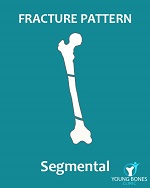
In a segmental fracture, there are two fractures in one bone but at different levels, leading to a free segment in between.

An impacted fracture is caused when the broken ends of the bone are compressed together by the force of injury. This includes examples such as depressed heel bone fractures after a fall from height and valgus impacted fractures of the femoral neck.
Fractures are often classified based on the position of the distal fracture fragment:
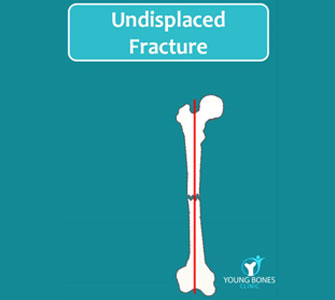
An un-displaced fracture is a fracture that is complete but has not moved from its original position.
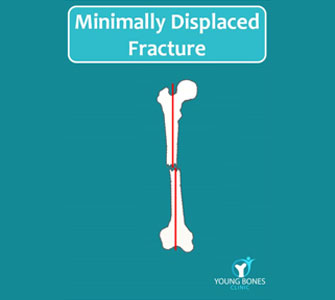
A fracture that has shifted the bone very little from its original position is said to be minimally displaced.
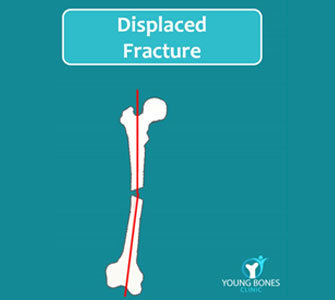
When the bone is significantly displaced from its original position, then it is called a displaced fracture.
Common causes of fractures include:
Symptoms of fracture may include:
Fractures may also be classified according to their relationship with the environment:

A fracture in which the bone is visible through the skin is called an open fracture.
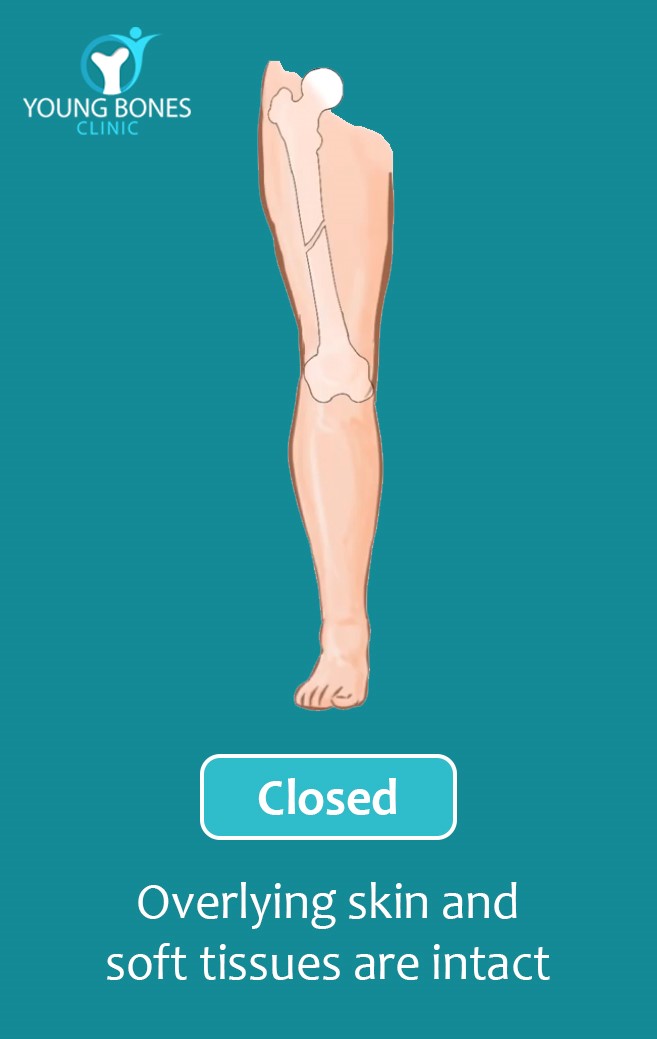
A closed fracture is a fracture wherein the bone is not visible through the skin.
Dr. Ratnav Ratan will first perform a physical examination and then suggest tests to locate the fracture and assess the condition of the surrounding area.
Treatment of the bone fracture include:
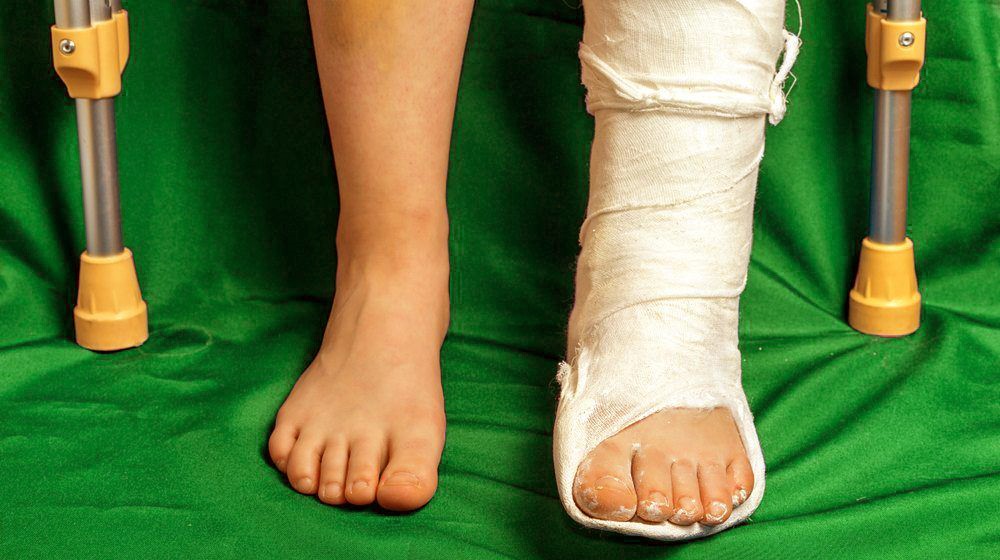
Plasters or fiberglass casts are used to protect and support fractured or injured bones and joints.
They help restrict the injured bone’s mobility and keep the bone intact until it gets healed fully.

Our surgeon might suggest medications to relieve the pain and eliminate vitamin deficiency.
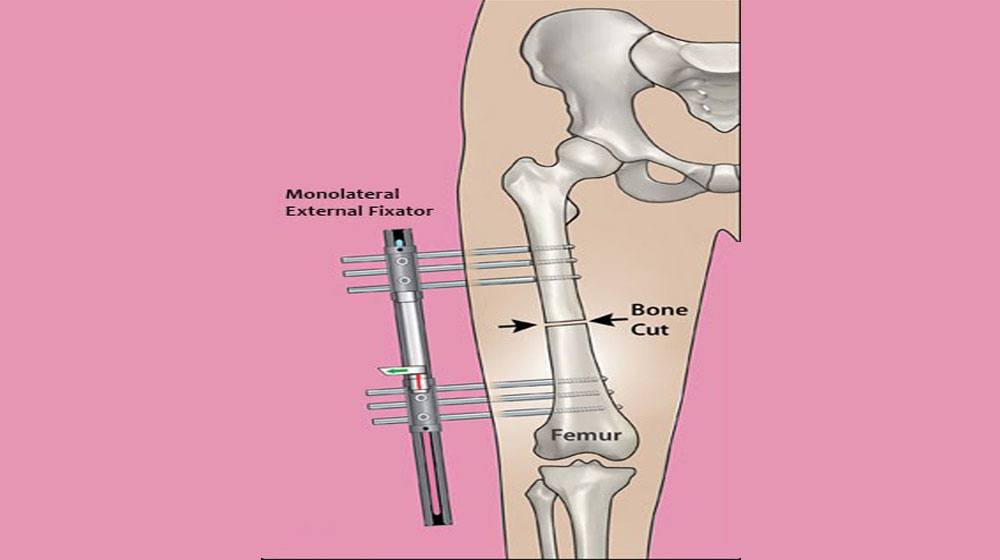
External fixation is a procedure that involves placing metal pins or screws into the broken bone above and below the fracture area.
The pins or screws are connected to a metal bar outside the skin, which holds the bones in the proper position while they heal.
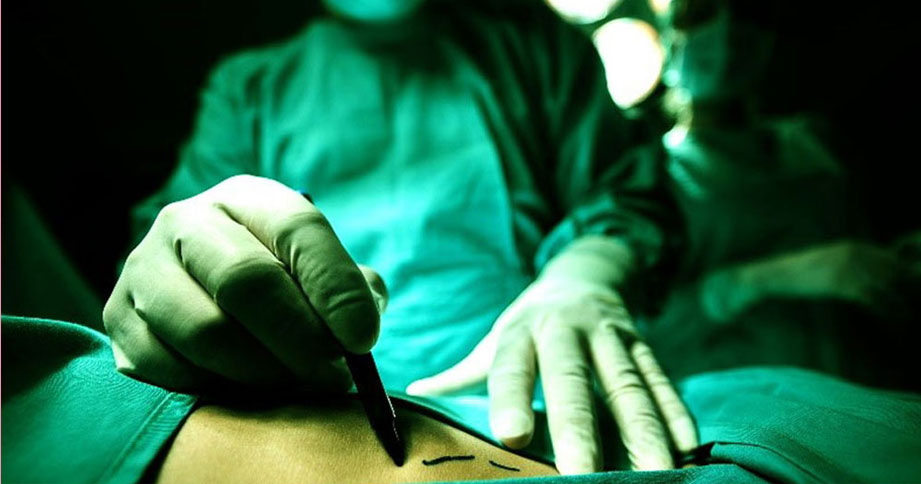
In some cases, surgery might be required to put certain types of broken bones back into place.
Occasionally, metal rods or pins placed inside or outside the bone are used to hold the bone fragments in place to allow alignment and healing.
A fracture usually requires prompt evaluation and treatment at a clinic or hospital. The exact treatment depends on age, medical history, extent of the condition, and the patient’s ability to tolerate a specific medication or procedure.
At Young Bones Clinic, the goal of fracture treatment is to control pain, heal the affected bone, prevent complications, and restore normal use of the fractured area.
If you or your child is experiencing symptoms of a fracture, seek orthopedic consultation as early as possible for proper care.